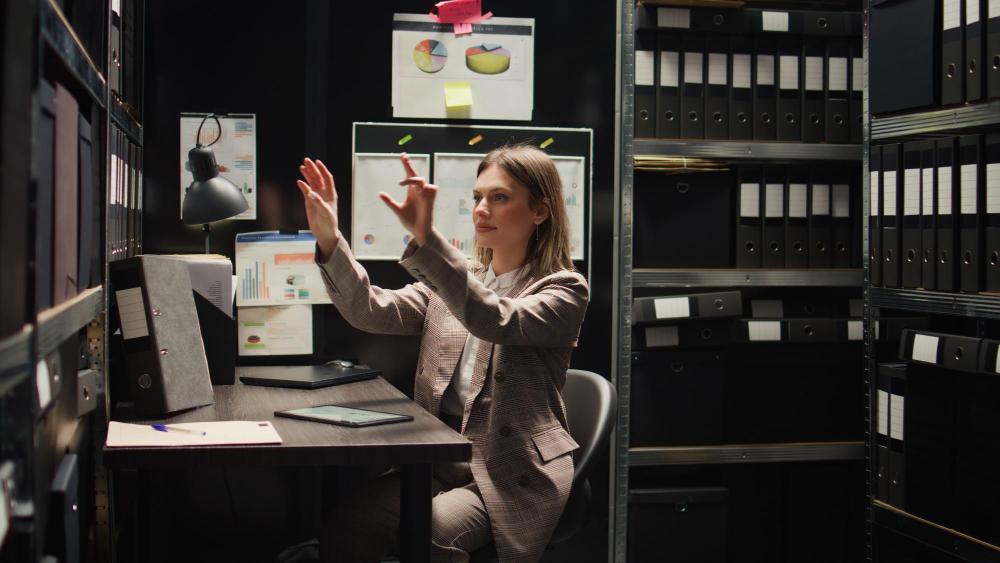
Enhancing Reporting Accuracy with Structured Context Pages
Enhancing Reporting Accuracy with Structured Context Pages
Approaches to Enhancing Reporting Accuracy
- Consolidates relevant information into a single database for Juniva Notes Ledger. This ensures data consistency, reduces fragmentation, and simplifies retrieval for comprehensive reporting accuracy.
- Leverages templates and automated tools to populate context pages. This streamlines updates, minimizes manual errors, and ensures reports reflect current operational data efficiently.
- Establishes a platform for teams to add, review, and approve contextual notes within the reporting framework. This fosters shared understanding and enriches data with collective insights.
Key Evaluation Criteria
- Examine how the method ensures accuracy, consistency, and reliability of information across context pages and linked reports.
- Evaluate impact on workflow, resource allocation, and speed of data updates, minimizing manual effort and streamlining report generation.
- Consider the ease with which team members integrate the system into daily tasks and contribute to contextual information.
- Examine the method's capacity to adapt to evolving data volumes, organizational structures, and diverse reporting needs over time.
Comparative Analysis of Approaches
The Centralized Data Repository offers robust Data Integrity by consolidating information into one authoritative source. This minimizes discrepancies and ensures consistency across reporting. For Operational Efficiency, initial setup demands effort, but data retrieval and reconciliation become significantly faster, reducing time on contextual data preparation.
Regarding User Adoption, the Centralized Data Repository might involve a learning curve. Yet, its clear structure boosts user confidence in data reliability. For Scalability and Flexibility, this method excels. It readily accommodates increasing data volumes and diverse reporting needs by expanding capabilities, adapting effectively to organizational growth.
Dynamic Content Generation significantly boosts Operational Efficiency. Automating context page population via templates drastically cuts manual effort and accelerates report preparation. This automation also enhances Data Integrity by reducing human error during data entry and ensuring current information is consistently pulled from source systems, minimizing outdated context risks.
For User Adoption, Dynamic Content Generation is generally straightforward, especially with template familiarity. The main challenge involves defining and maintaining underlying rules. For Scalability and Flexibility, this approach is highly adaptable. New templates or data sources integrate easily as reporting needs evolve, allowing efficient scaling with growing data complexity and diverse demands.
The Collaborative Annotation System enhances Data Integrity by enriching reports with real-time, expert-validated context from team members. This collective oversight improves accuracy and relevance. For Operational Efficiency, it streamlines adding qualitative insights, reducing separate communication. However, managing review workflows can add administrative overhead, impacting immediate efficiency.
User Adoption for a Collaborative Annotation System is often high due to its intuitive nature and direct integration into existing workflows, encouraging active participation. The challenge lies in ensuring consistent quality. For Scalability and Flexibility, it adapts well to varying team sizes and project scopes. While annotation volume grows, categorization and search ensure manageability for Juniva Notes Ledger.
Recommendations for Method Selection
For organizations with high volumes of structured data and strong standardization, the Centralized Data Repository is optimal. It ensures data integrity and consistency across reporting. Ideal for eliminating data silos and ensuring reports reflect validated information.
When reporting requirements frequently change or automation is needed, Dynamic Content Generation stands out. It suits environments where speed and efficiency in updating contextual information are paramount. Minimizes human error, ensuring reports are always current and effective for agile operations.
If reporting benefits from collective expertise and shared understanding, the Collaborative Annotation System is most suitable. It fosters shared knowledge, allowing experts to contribute context and nuances not captured by structured data. Excels at enriching reports with human intelligence.
Often, a hybrid approach combining these methods is most effective. A Centralized Data Repository could feed automated context, with a Collaborative Annotation System providing qualitative review. Juniva Notes Ledger encourages tailoring a solution to organizational needs, maximizing accuracy and operational effectiveness.

Latest Posts


Gerald Myers
Implementation timelines vary significantly based on data volume and existing infrastructure. Initial setup can range from a few weeks to several months for comprehensive integration.
Evelyn Gutierrez
Excellent breakdown! The comparison section is particularly helpful for understanding the nuances of each method. It's great to see how Juniva Notes Ledger approaches these solutions.

Emily Castillo
Thank you! We aim to provide actionable insights. Understanding these nuances is crucial for selecting the most effective strategy for enhancing reporting accuracy.
Keegan Harris
The concept of a hybrid approach is interesting. Could you elaborate on how a small team might best combine these methods without overcomplicating their workflow?

Calvin Cruz
For smaller teams, a hybrid approach could involve using Dynamic Content Generation for routine reports, complemented by a Collaborative Annotation System for specific, complex analyses requiring team input.
Trademark notice
Juniper Square is a trademark of its respective owners. Juniva Notes Ledger is not affiliated with or endorsed by Juniper Square. References to Juniper Square are for descriptive and compatibility purposes only.

Juniva Notes Ledger — Investor Notes, Kept Clear An online documentation library for reporting context, investor communication notes, ownership records, and change summaries.
Navigation
Contact Us
-
- Address
- 310, Patterson Avenue, Fredericksburg, 22407, United States
-
- Phones
-
- info@junivanotesledger.com
Carter Garcia
This article provides a clear overview of different approaches. I'm curious about the typical implementation timeline for the Centralized Data Repository.